Friday, September 23, 2005

Another peek at our place

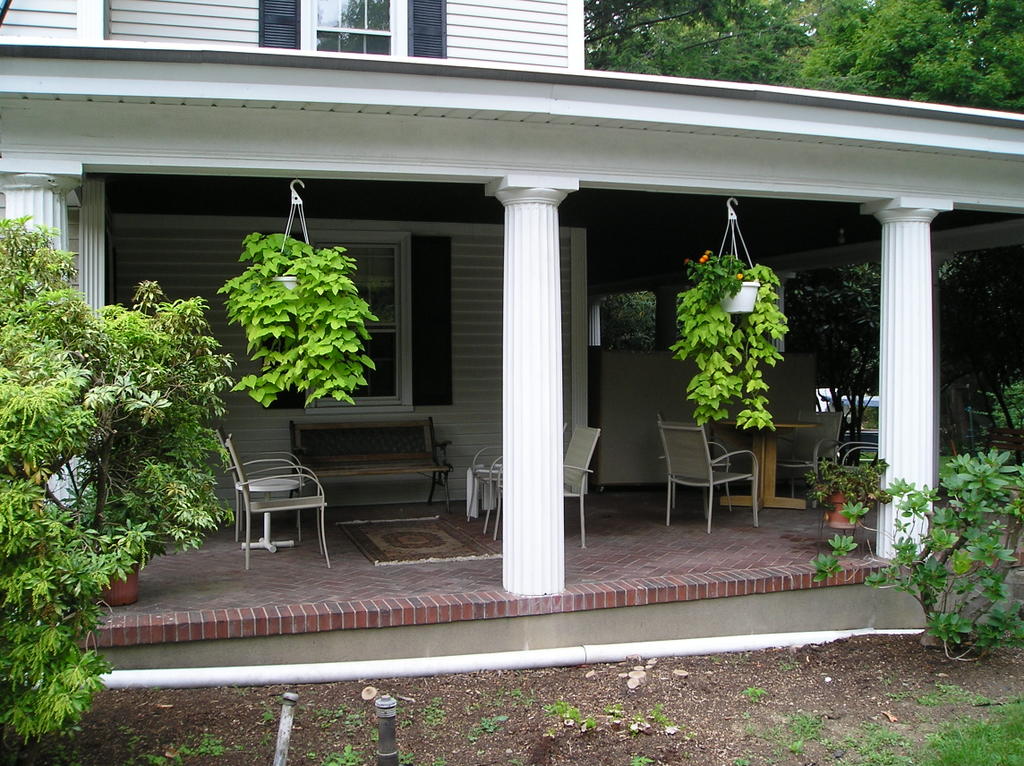
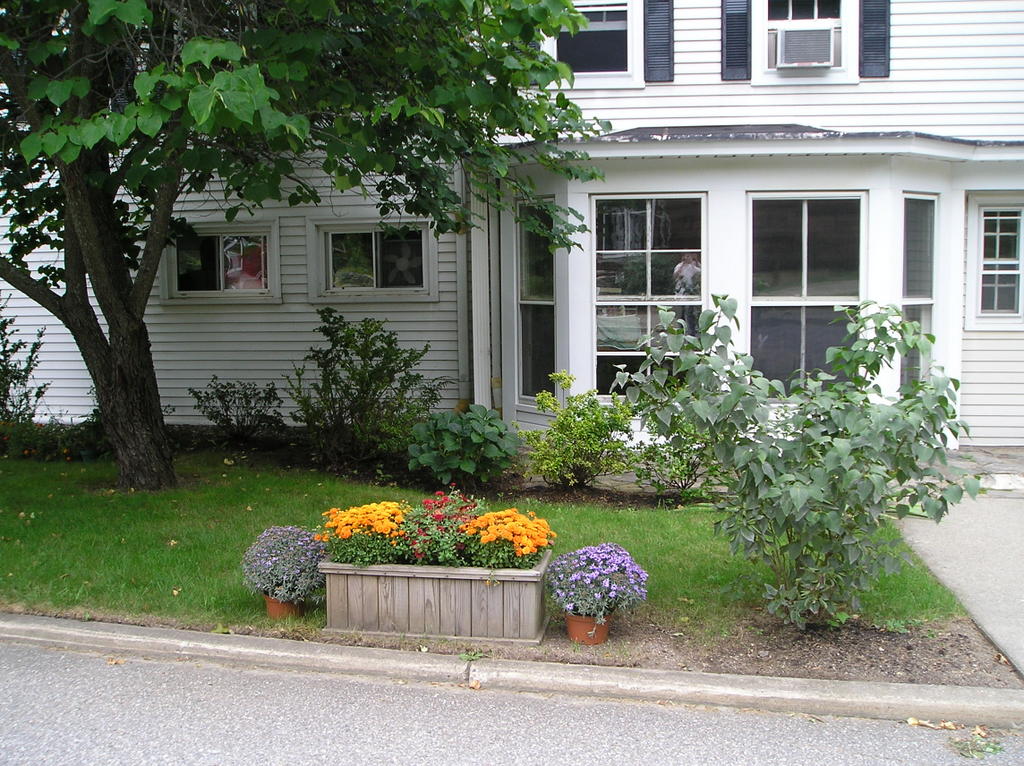
I've been working outside a lot this summer, and part of my effort has been to give Major Haircuts to some of the plants around the convent. In some cases, that meant cutting the plant right down to the ground. We have a glorious porch that wraps around three sides of the house, and we decided to create an area where we could sit and watch the day go by, just for the fun of it. Here are a couple of pictures showing the result of those efforts.

I'm not a great fan of destroying plant life, but on the other hand, if destruction results in the transformation needed to open the door to something new, I'm willing to participate. At one point a large azalea and two rhododenrons were sacrificed, partly due to their ill health, partly due to their invasive behavior on their neighbors, and partly due to their willingness to house a large next of stinging creatures.

Life moves on.

Transformation

The following blog entry is a copy of a short article written for our AweWakenings newsletter.


A couple of years ago I was thinking about life processes, particularly from the perspective of “deep time”—the full thirteen-plus billion year history of our amazing Universe. While studying what was happening throughout that long history, I began to see a pattern in the journey that all life makes.

I had always thought that resurrection was the natural and logical progression from death. The awareness that transformation is (and always has been) an essential and thrilling ingredient of existence was an entirely new concept for me.

Suddenly I recognized the great circle of life: birth leading to life, which leads to death, which is the door into transformation, out of which flares an infinite geography of potentialities. With the selection of one of those rich possibilities, resurrection flares toward the realized experience we call “birth”, which leads to life, which leads to death ...

On and on, round and round, the glorious wheel of life spins through time. From grape seeds to galaxies, there is no beginning and no end: the hydrogen that flared into existence shortly after space and time and everything else in the Universe began, has been recycled through supernovae, moons, giraffes, smart weed and me. I don't look anything like smart weed or a star, but that's because my perception is limited by the particularity of my species.

I don't know why it never struck me before, but I found myself feeling the affirmation of Jesus' own experience. Between the crucifixion and resurrection Jesus experienced transformation—how could I possibly have missed that? I once thought of the “harrowing of hell” as a job Jesus had to do; but what if our scripture is the best effort of Jesus' followers to report their understanding of a process Jesus had to experience? And what about the inability of Jesus' friends to recognize the resurrected Christ? Surely he was transformed—the same, and yet not at all the same.

Transformation does occur within the capability of our human senses, but I think we see the process so often we don't particularly notice it. When we do, we take it in as “ordinary” rather than as the sacred miracle it reflects.

A maple tree seed flutters to the ground and lands in a pile of leaves, which mix with the soil and rain to bury the seed in protective mulch. Over the winter the seed appears dead, but the promise of a tree stirs in that “dead” matter, and when that promise awakens to the call of sun and spring thaw, a tiny green shoot struggles through the soil. There under our foot is proof that transformation has occurred.

Every child born is entirely new and entirely unique thanks to Mystery and the miracle of transformation. Yet every child born is made from star dust that has witnessed the unfolding of the Universe for billions of years.

We live in an essentially transformative Universe, constantly manifesting reflections of the Divine Mystery that comprehends and brings into existence something new every moment. From a scientific perspective most of our Universe, from quarks to quasars, is not matter at all but a “fecund nothingness”, a soup of creative energy out of which particles appear and disappear as if by magic. The way I see it, the vast majority of our Universe is occupied by transformation in action.

I have barely begun to understand the science of the stupendous transformation process, but I readily accept that the creative nature of God floods us with its glory, and that we are made from the Mystery that dreamed an entire Universe into being and set its circle of life spinning through time. Whether we are mystified by quantum physics or awed by the birth of a child, transformation weaves its magic from under our noses to the far reaches of the Universe.

How could anything so marvelous and miraculous and seemingly impossible as transformation escape our notice, our reverence, our respect, our praise?
Thursday, September 22, 2005

Night Prayers

Good heavens, August 13th. Is that really my most recent blog?? Where have I been and what have I been up to?

Time really does speed up as you age. This is provable in the theories of quantum physics: everyone now knows that the faster one travels through space, the slower time goes by; and the slower one travels, the faster time moves. OK, so as I age, I'm definitely moving slower and time definitely moves faster. See? Quantum physics rules.

All of which has nothing whatsoever to do with the following blog entry.

We've once again changed our schedule (well, yes, I suppose that does have to do with time), and switched from a "combined Office" (a combination of Evening Prayer and Compline) to two separate visits to chapel. That makes Evening Prayer occur in the late afternoon, while there is still light enough to read in our electricity-less chapel.

Compline, on the other hand, is experienced the same way our brothers and sisters of old did it: by the flickering light of candles and oil lamps. I confess that I've added a high-tech booklight to my prayer equipment, though. I probably could sing Compline in the dark, which is precisely why these traditional night prayers were designed to be simple and consistent. But I'm more comfortable with a little more light and a lot less dependence on my memory. Like the rest of me it is slowing down.

There was more than candlelight and monastic atmosphere present tonight, however. Tonight we were joined by our non-human neighbors. During the silent pause between halves of Psalm verses, and in precisely the same key, a Barred Owl inserted her "who-cooks-for-you" hoot from the trees surrounding the back meadow. And as our Compline prayer drew to its quiet close, a pack of coyotes off in the forest tuned up a yelping, howling chorus.

Night Prayers: the vocal offering of God's creatures in reflection and hope and joy. Thanks for a peaceful, safe day. How about a good rabbit for dinner? Any mice or voles available?

Sometimes the sound of our own voices is prayer enough to get us through the night.

Saturday, August 13, 2005

Sticky Stuff

Garlic. Cooked milk. Two natural items I've always thought would make great glue. Now that I'm living much closer to the Earth, I'm discovering more really sticky stuff.

Like duck poop.

Okay, this probably isn't the most gracious of subjects, but it fascinates me. Earth wastes nothing, so the tail end (so to speak) of food processing is no less important than the gorgeous greens and corn that begin it. Ducks produce high-nitrogen fertilizer, and are quite efficient about making sure it's applied usefully. For one thing, there is quite a bit of it. For another, it's applied in liquid form and then solidifies on its own. For a third, it's sticky as all get-out. This is great for the Earth, assuring abundant and fairly even addition of nitrogen to the soil.

It's not so great for shoes, though, which is probably why all the duck books suggest changing foot attire when entering the duck pen. Not realizing all the implications of duck doo-doo, I ignored the books and learned about this the hard way. Please take my word for it: getting the soles of your shoes free of this amazingly clingy stuff takes quite awhile. And while you're doing it, you probably won't care at all how much the Earth enjoys receiving all this nitrogen-rich help.

But it gave me a lot of time to think about sticky stuff. It seems that "poop" of all kinds attaches itself to us like glue. Wanting to hang on a lot of stuff we don't need now, and probably never did. Knowing good and well that being angry or judgmental or pouty or a drama queen will get us nowhere fast, but we still do it. Thinking our own ideas and plans should be listened to and followed by everyone else. Always.

This might be what Jesus was talking about when he told the young man he had to let go of everything before he could be really free. Some of our sticky stuff can be quite useful to others, once we get unstuck from it. A lot of it should just be abandoned.

Either way, getting the duck poop of life off your soul can be hard work. It's really sticky stuff.

Saturday, August 06, 2005

Fire in the Sky


My office/"cell" has a west window, but I have to be in a rather contorted position to see much besides another side of the house and the little chapel. Purely by accident, I was in that contorted position tonight, and was stunned to see a little slice of this sunset in progress. I tore down the stairs, grabbing the camera on my way.

Once in a while the sun, the western clouds and pure chance combine to reflect our local star's fire back to my eye; all the variables are exactly tuned to this kind of display. When it happens I seem to have trouble breathing.

I just can't imagine any purpose for this spectacular show other than to awe and silence us. As far as I can tell, humans are the only creatures who even notice such a thing, and if we're at all conscious, we stop whatever we are doing and stare, transfixed. We dare not look away; within minutes the light will go out and we'll be left with a burning memory that we aren't completely sure really happened quite the way we remember it.

If we are indeed the only creature aware of this prodigal beauty, we should be responsible and respectful enough to celebrate — yes, to praise — the astonishing glory of our Earth, and to do so for all her living systems.

We should do this, just because we can.